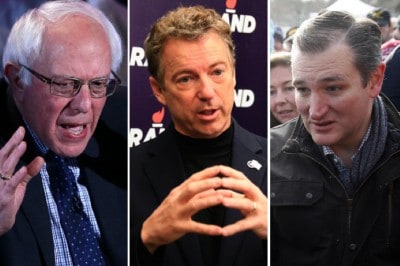
Democratic presidential candidate Bernie Sanders is known for his attacks on Wall Street and the influence they have in politics and over the nation. In an op-ed printed in the New York Times, Sanders said, “To rein in Wall Street, we should begin by reforming the Federal Reserve, which oversees financial institutions and which uses monetary policy to maintain price stability and full employment. Unfortunately, an institution that was created to serve all Americans has been hijacked by the very bankers it regulates.”
The Federal Reserve is a central bank of the United States who has come under fire since 2008 when it bailed out the big banks that were responsible for the financial crisis. Several bills have been introduced since the bailout that are similar to the Audit the Fed bill and provided the Government Accountability Office some oversight, allowing them to perform a light audit per the Dodd-Frank amendment that Sanders himself added. These bills did not allow for a full and independent audit, as Sanders and Rand Paul, who is the father of the Audit the Fed bill, are now calling for.
The Audit the Fed bill passed in the House but failed to get the 60 votes needed to pass in the Senate. Though Republicans voted almost unanimously to pass the bill (Ted Cruz, who said he supported the bill, didn’t even show up to vote), the Democratic senators are the ones who killed the bill. Some speculate that this is because Obama did not want to take on the Federal Reserve during his last year and asked that Democrats oppose the bill. Democrats who voted “nay” on the bill, like Senator Brown from Ohio, claim that their reason for opposing it is because, “We’ll see many members of Congress pushing the Fed to side with the bondholders and Wall Street on combating inflation rather than siding with main street and small businesses and workers in dealing with unemployment.” Others have stated that it would give the government too much power and would politicize the Fed.
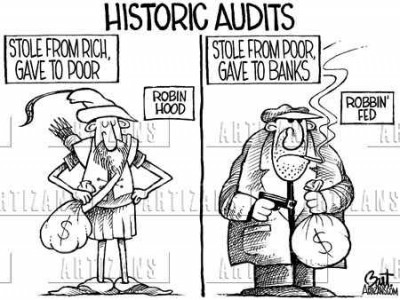
Senator Paul, who understands that the Federal Reserve is owned and already politicized by the big banks it’s supposed to regulate, stated, “I can’t imagine anyone voting against transparency. This whole thing that it would be politicized if Congress has something to say about it — it’s always politicized, it’s just who’s behind the scenes doing the politicizing. And that’s what they don’t want to know, because the special interests are the political forces that direct monetary policy.” So at the end of the day, would the American people prefer that the government regulate the Fed, or special big bank interests?
Sanders points out the way in which the big banks run the Federal Reserve by explaining that the chief executives of the large banks are allowed to serve on the board of the Fed. In the 2008 crisis, one of the banks in trouble (at their own fault) was JPMorgan. Lucky for them, the chief executive and chairman of JPMorgan was on the New York Fed’s board and helped decide that his bank would receive $390 billion in Federal Reserve loans, though it was more like a handout since they only had to pay $13 billion back. Sanders also mentions that beginning next year, four former executives from Goldman Sachs will make up one-third of the presidents of the Federal Reserve’s regional banks.
The Audit the Fed bill might be dead, but legislature like this surely is not done with being introduced. Despite the loss, Rand Paul’s father, former Texas Representative Ron Paul, told U.S. News that the bill was a “tremendous success” since “we really never expected to overcome cloture.” Sanders will likely continue to push for the reinstatement of the Glass-Steagall Act from the Depression-era, which called for banking regulation that created a wall between consumer and investment banks. It seems that this bill was just a part of the momentum pushing in the direction of reformation and regulation of the Federal Reserve.
What do you think? Do you think the Democrats were right in shooting down this bill? Comment your thoughts below and share this article!
This article (Though Sanders Voted Yes, “Audit The Fed[eral Reserve]” Bill Fails In The Senate) is free and open source. You have permission to republish this article under a Creative Commons license with attribution to the author and TrueActivist.com.